Lorem ipsum dolor sit amet, consectetur adipiscing elit, sed do eiusmod tempor incididunt ut labore et dolore magna aliqua. Ut enim ad minim veniam, quis nostrud exercitation ullamco laboris nisi ut aliquip ex ea commodo consequat. Duis aute irure dolor in reprehenderit in voluptate velit esse cillum dolore eu fugiat nulla pariatur.
Block quote
Ordered list
Unordered list
Bold text
Emphasis
Superscript
Subscript
Early SCM focused on aligning business functions for product flow. As supply chains globalized, cost focus shifted to value.
Learn more about this eventWhen I started in supply chain, the concept of supply chain management was still in its infancy, and many companies didn't yet take it seriously. The first job I had involved manufacturing, warehousing, and a production control team that communicated with customers about the order status. Reporting and visibility were not integrated as we worked on different systems and were siloed in our own departments. I reflect back to one of my first managers who said to me, ‘How hard is it to put a box on a truck?’ The answer being that it’s not that difficult. But the trick is knowing which box to put on which truck and when…
In the beginnings of supply chain management, SCM reflected changing business needs. Getting the production, sales, finance, marketing, and the delivery parts of the business aligned together on the movement and availability of products. The world grew smaller and supply chains became global. The focus on cost and cost control in individual business units evolved into managing the value chain.
Locally, as delivery moved from wholesale (largely full pallet movements), to direct to retail (individual unit picking but box lot delivery), to direct to consumer (single unit delivered to a home address), the 2000s, saw the introduction of new technology and the digitalization of supply chain management which helped to get ‘the right box, to the right place, at the right time, and in the most cost-effective fashion’.
It never seems to be enough as requirements are constantly evolving. The need for customer-centricity has continued to drive supply chain management, while environmental concerns are becoming increasingly important as required both by the customer, and by new legislation.
The goal has always been to put a box on a truck, and the challenge is still putting the correct box on the correct vehicle but with a huge increase in complexity and pressure on doing it optimally and in a manner that is environmentally conscious.
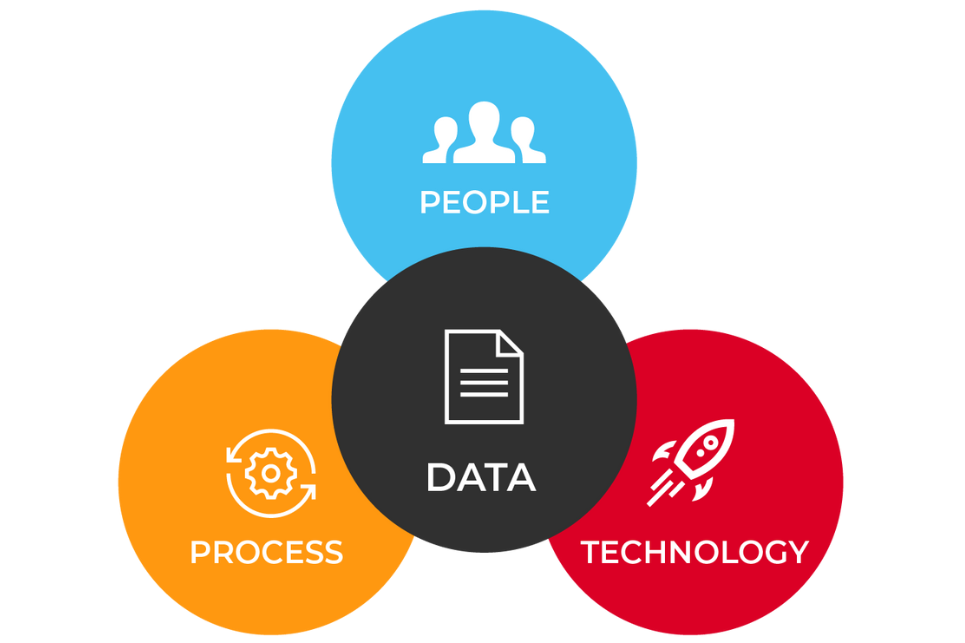
There is no small irony that we have been talking about a single view of the truth, real time visibility, connected planning and execution and collaboration between finance, sales and marketing, procurement and supply chain for decades, and yet today many companies still struggle to have the correct framework of: organisation, technology and processes in place to meet their current (and future) needs. Underlying this is access to data. We continue to see rapid change in supply chain with end to end digitisation facilitating informed decision making in a way not possible even 10 years ago.
Matching supply chain management with enabling technologies is essential to managing this complexity and creating the internal organisational alignment across departments. Managing the processes and technology to create a single view of the truth with the flexibility to plan and run ad hoc scenarios on the fly to support real time business needs is now a basic requirement, not a nice to have. For a long time supply chain was perceived as the problem holder, but needs to be seen as a solution provider and facilitator for the wider business.
Over the years I have learned a lot, and I will continue to learn more as I go. My time in Supply Chain Strategy Consultancy made me evangelical about digital transformation and the impact this has on businesses and the Supply Chain. It also gave me the framework of organization, processes and technology, underpinned by data to think about as the levers that I can pull to address business issues.
I have been fortunate in that I have designed and built end to end supply chain solutions for both planning and execution; building the technology stacks, the organisations, and the business processes to support their (ever changing) requirements. I have been lucky to work with and meet inspiring and talented people.
If digital transformation within SCM and connected planning is a topic you are engaged in, contact Keyrus to talk with our experts!

When I started in supply chain, the concept of supply chain management was still in its infancy, and many companies didn't yet take it seriously. The first job I had involved manufacturing, warehousing, and a production control team that communicated with customers about the order status. Reporting and visibility were not integrated as we worked on different systems and were siloed in our own departments. I reflect back to one of my first managers who said to me, ‘How hard is it to put a box on a truck?’ The answer being that it’s not that difficult. But the trick is knowing which box to put on which truck and when…
In the beginnings of supply chain management, SCM reflected changing business needs. Getting the production, sales, finance, marketing, and the delivery parts of the business aligned together on the movement and availability of products. The world grew smaller and supply chains became global. The focus on cost and cost control in individual business units evolved into managing the value chain.
Locally, as delivery moved from wholesale (largely full pallet movements), to direct to retail (individual unit picking but box lot delivery), to direct to consumer (single unit delivered to a home address), the 2000s, saw the introduction of new technology and the digitalization of supply chain management which helped to get ‘the right box, to the right place, at the right time, and in the most cost-effective fashion’.
It never seems to be enough as requirements are constantly evolving. The need for customer-centricity has continued to drive supply chain management, while environmental concerns are becoming increasingly important as required both by the customer, and by new legislation.
The goal has always been to put a box on a truck, and the challenge is still putting the correct box on the correct vehicle but with a huge increase in complexity and pressure on doing it optimally and in a manner that is environmentally conscious.
There is no small irony that we have been talking about a single view of the truth, real time visibility, connected planning and execution and collaboration between finance, sales and marketing, procurement and supply chain for decades, and yet today many companies still struggle to have the correct framework of: organisation, technology and processes in place to meet their current (and future) needs. Underlying this is access to data. We continue to see rapid change in supply chain with end to end digitisation facilitating informed decision making in a way not possible even 10 years ago.
Matching supply chain management with enabling technologies is essential to managing this complexity and creating the internal organisational alignment across departments. Managing the processes and technology to create a single view of the truth with the flexibility to plan and run ad hoc scenarios on the fly to support real time business needs is now a basic requirement, not a nice to have. For a long time supply chain was perceived as the problem holder, but needs to be seen as a solution provider and facilitator for the wider business.
Over the years I have learned a lot, and I will continue to learn more as I go. My time in Supply Chain Strategy Consultancy made me evangelical about digital transformation and the impact this has on businesses and the Supply Chain. It also gave me the framework of organization, processes and technology, underpinned by data to think about as the levers that I can pull to address business issues.
I have been fortunate in that I have designed and built end to end supply chain solutions for both planning and execution; building the technology stacks, the organisations, and the business processes to support their (ever changing) requirements. I have been lucky to work with and meet inspiring and talented people.
If digital transformation within SCM and connected planning is a topic you are engaged in, contact Keyrus to talk with our experts!
When I started in supply chain, the concept of supply chain management was still in its infancy, and many companies didn't yet take it seriously. The first job I had involved manufacturing, warehousing, and a production control team that communicated with customers about the order status. Reporting and visibility were not integrated as we worked on different systems and were siloed in our own departments. I reflect back to one of my first managers who said to me, ‘How hard is it to put a box on a truck?’ The answer being that it’s not that difficult. But the trick is knowing which box to put on which truck and when…
In the beginnings of supply chain management, SCM reflected changing business needs. Getting the production, sales, finance, marketing, and the delivery parts of the business aligned together on the movement and availability of products. The world grew smaller and supply chains became global. The focus on cost and cost control in individual business units evolved into managing the value chain.
Locally, as delivery moved from wholesale (largely full pallet movements), to direct to retail (individual unit picking but box lot delivery), to direct to consumer (single unit delivered to a home address), the 2000s, saw the introduction of new technology and the digitalization of supply chain management which helped to get ‘the right box, to the right place, at the right time, and in the most cost-effective fashion’.
It never seems to be enough as requirements are constantly evolving. The need for customer-centricity has continued to drive supply chain management, while environmental concerns are becoming increasingly important as required both by the customer, and by new legislation.
The goal has always been to put a box on a truck, and the challenge is still putting the correct box on the correct vehicle but with a huge increase in complexity and pressure on doing it optimally and in a manner that is environmentally conscious.
There is no small irony that we have been talking about a single view of the truth, real time visibility, connected planning and execution and collaboration between finance, sales and marketing, procurement and supply chain for decades, and yet today many companies still struggle to have the correct framework of: organisation, technology and processes in place to meet their current (and future) needs. Underlying this is access to data. We continue to see rapid change in supply chain with end to end digitisation facilitating informed decision making in a way not possible even 10 years ago.
Matching supply chain management with enabling technologies is essential to managing this complexity and creating the internal organisational alignment across departments. Managing the processes and technology to create a single view of the truth with the flexibility to plan and run ad hoc scenarios on the fly to support real time business needs is now a basic requirement, not a nice to have. For a long time supply chain was perceived as the problem holder, but needs to be seen as a solution provider and facilitator for the wider business.
Over the years I have learned a lot, and I will continue to learn more as I go. My time in Supply Chain Strategy Consultancy made me evangelical about digital transformation and the impact this has on businesses and the Supply Chain. It also gave me the framework of organization, processes and technology, underpinned by data to think about as the levers that I can pull to address business issues.
I have been fortunate in that I have designed and built end to end supply chain solutions for both planning and execution; building the technology stacks, the organisations, and the business processes to support their (ever changing) requirements. I have been lucky to work with and meet inspiring and talented people.
If digital transformation within SCM and connected planning is a topic you are engaged in, contact Keyrus to talk with our experts!
When I started in supply chain, the concept of supply chain management was still in its infancy, and many companies didn't yet take it seriously. The first job I had involved manufacturing, warehousing, and a production control team that communicated with customers about the order status. Reporting and visibility were not integrated as we worked on different systems and were siloed in our own departments. I reflect back to one of my first managers who said to me, ‘How hard is it to put a box on a truck?’ The answer being that it’s not that difficult. But the trick is knowing which box to put on which truck and when…
In the beginnings of supply chain management, SCM reflected changing business needs. Getting the production, sales, finance, marketing, and the delivery parts of the business aligned together on the movement and availability of products. The world grew smaller and supply chains became global. The focus on cost and cost control in individual business units evolved into managing the value chain.
Locally, as delivery moved from wholesale (largely full pallet movements), to direct to retail (individual unit picking but box lot delivery), to direct to consumer (single unit delivered to a home address), the 2000s, saw the introduction of new technology and the digitalization of supply chain management which helped to get ‘the right box, to the right place, at the right time, and in the most cost-effective fashion’.
It never seems to be enough as requirements are constantly evolving. The need for customer-centricity has continued to drive supply chain management, while environmental concerns are becoming increasingly important as required both by the customer, and by new legislation.
The goal has always been to put a box on a truck, and the challenge is still putting the correct box on the correct vehicle but with a huge increase in complexity and pressure on doing it optimally and in a manner that is environmentally conscious.
There is no small irony that we have been talking about a single view of the truth, real time visibility, connected planning and execution and collaboration between finance, sales and marketing, procurement and supply chain for decades, and yet today many companies still struggle to have the correct framework of: organisation, technology and processes in place to meet their current (and future) needs. Underlying this is access to data. We continue to see rapid change in supply chain with end to end digitisation facilitating informed decision making in a way not possible even 10 years ago.
Matching supply chain management with enabling technologies is essential to managing this complexity and creating the internal organisational alignment across departments. Managing the processes and technology to create a single view of the truth with the flexibility to plan and run ad hoc scenarios on the fly to support real time business needs is now a basic requirement, not a nice to have. For a long time supply chain was perceived as the problem holder, but needs to be seen as a solution provider and facilitator for the wider business.
Over the years I have learned a lot, and I will continue to learn more as I go. My time in Supply Chain Strategy Consultancy made me evangelical about digital transformation and the impact this has on businesses and the Supply Chain. It also gave me the framework of organization, processes and technology, underpinned by data to think about as the levers that I can pull to address business issues.
I have been fortunate in that I have designed and built end to end supply chain solutions for both planning and execution; building the technology stacks, the organisations, and the business processes to support their (ever changing) requirements. I have been lucky to work with and meet inspiring and talented people.
If digital transformation within SCM and connected planning is a topic you are engaged in, contact Keyrus to talk with our experts!

When I started in supply chain, the concept of supply chain management was still in its infancy, and many companies didn't yet take it seriously. The first job I had involved manufacturing, warehousing, and a production control team that communicated with customers about the order status. Reporting and visibility were not integrated as we worked on different systems and were siloed in our own departments. I reflect back to one of my first managers who said to me, ‘How hard is it to put a box on a truck?’ The answer being that it’s not that difficult. But the trick is knowing which box to put on which truck and when…
In the beginnings of supply chain management, SCM reflected changing business needs. Getting the production, sales, finance, marketing, and the delivery parts of the business aligned together on the movement and availability of products. The world grew smaller and supply chains became global. The focus on cost and cost control in individual business units evolved into managing the value chain.
Locally, as delivery moved from wholesale (largely full pallet movements), to direct to retail (individual unit picking but box lot delivery), to direct to consumer (single unit delivered to a home address), the 2000s, saw the introduction of new technology and the digitalization of supply chain management which helped to get ‘the right box, to the right place, at the right time, and in the most cost-effective fashion’.
It never seems to be enough as requirements are constantly evolving. The need for customer-centricity has continued to drive supply chain management, while environmental concerns are becoming increasingly important as required both by the customer, and by new legislation.
The goal has always been to put a box on a truck, and the challenge is still putting the correct box on the correct vehicle but with a huge increase in complexity and pressure on doing it optimally and in a manner that is environmentally conscious.
There is no small irony that we have been talking about a single view of the truth, real time visibility, connected planning and execution and collaboration between finance, sales and marketing, procurement and supply chain for decades, and yet today many companies still struggle to have the correct framework of: organisation, technology and processes in place to meet their current (and future) needs. Underlying this is access to data. We continue to see rapid change in supply chain with end to end digitisation facilitating informed decision making in a way not possible even 10 years ago.
Matching supply chain management with enabling technologies is essential to managing this complexity and creating the internal organisational alignment across departments. Managing the processes and technology to create a single view of the truth with the flexibility to plan and run ad hoc scenarios on the fly to support real time business needs is now a basic requirement, not a nice to have. For a long time supply chain was perceived as the problem holder, but needs to be seen as a solution provider and facilitator for the wider business.
Over the years I have learned a lot, and I will continue to learn more as I go. My time in Supply Chain Strategy Consultancy made me evangelical about digital transformation and the impact this has on businesses and the Supply Chain. It also gave me the framework of organization, processes and technology, underpinned by data to think about as the levers that I can pull to address business issues.
I have been fortunate in that I have designed and built end to end supply chain solutions for both planning and execution; building the technology stacks, the organisations, and the business processes to support their (ever changing) requirements. I have been lucky to work with and meet inspiring and talented people.
If digital transformation within SCM and connected planning is a topic you are engaged in, contact Keyrus to talk with our experts!







Access the full details of this key play, and have it on the go. Available as a PDF.


Have questions about our EPM solutions? Our team is ready to help you find the right approach for your business.