Lorem ipsum dolor sit amet, consectetur adipiscing elit, sed do eiusmod tempor incididunt ut labore et dolore magna aliqua. Ut enim ad minim veniam, quis nostrud exercitation ullamco laboris nisi ut aliquip ex ea commodo consequat. Duis aute irure dolor in reprehenderit in voluptate velit esse cillum dolore eu fugiat nulla pariatur.
Block quote
Ordered list
Unordered list
Bold text
Emphasis
Superscript
Subscript
Excel and ERP weren't built for modern procurement planning. See how connected EPM platforms close the gap and enable real-time decisions.
Learn more about this eventThere is a familiar moment in many procurement transformation programmes. The processes are well designed. The business questions are clear. And then the conversation hits the same point every time: the tools.
At that moment, it becomes obvious that the insights the organisation wants to generate — and the decisions it wants to make — simply aren’t achievable with Excel or with disconnected point solutions that cannot operate at the required speed or scale. More than once, the reaction is a complete shift in mindset:
“This is great, I want to get rid of excel in our planning processes.”
Excel is a great tool, and there are always tasks that should be performed in excel that don’t lend themselves to an ERP or EPM system. Generally, you started down the road of EPM implementation because of the limitation of excel and the gap in what you need to run the business and what excel can provide.
This post is about that gap. Not the procurement strategy, not the finance relationship, but the technology, and what modern Enterprise Performance Management platforms bring to the table, and why this is increasingly a strategic question rather than a systems one.
It important to be clear about this, because the conversation sometimes gets stuck in a debate about spreadsheets. The issue is not that Excel produces wrong answers. For a single category managed by one person with a defined set of inputs, it does the maths perfectly well. The issue is what happens when the business, and hence the challenges scale.
A larger CPG business managing direct materials procurement might have several hundred or several thousand active materials, sourced from multiple suppliers per category, across different geographies. Contract structures vary and cost drivers differ. Some of those materials are commodity-linked, other are logistics driven, ither depend on FXC movements. All of them ultimately feeding into product cost, which feeds into margin, which feeds into the financial plan.
Modelling that in a spreadsheet is technically possible. It just means a lot of tabs, multiple files maintained by different people, linked together with formulas that break when someone renames a tab or workbook, with no version control, no audit trail, and no ability for two people to work in the same spreadsheet at the same time. When something changes mid-cycle and the category manager needs to reforecast, the process of updating and reconciling can take longer than the planning cycle itself.
This is the structural limitation. Excel was designed as a calculation tool, not a planning platform.
ERP systems are the system of record for your transactional data: purchase orders, invoices, goods receipts, master data etc; OK no great insight here. They are good at capturing what happened. Where many organisations struggle is moving beyond execution into integrated, forward‑looking planning. ERPs still find it hard to model what might happen, to run scenarios, or to connect operational cost drivers to forecasted performance and financial plans at speed. Integrated S&OP and IBP capabilities have improved, but often not quickly or flexibly enough for procurement’s needs.
The gap between what ERP captures and what modern procurement planning requires is where most of the manual work lives. Data extracted from ERP, loaded into spreadsheets, manipulated, formatted and then sent to finance for further processing. Every step in that chain introduces the possibility of error, delay and version divergence. And every time market conditions change, the chain has to run again. BI reporting takes some of the effort out, but it can’t give you that dynamic, time series view and scenario analysis.
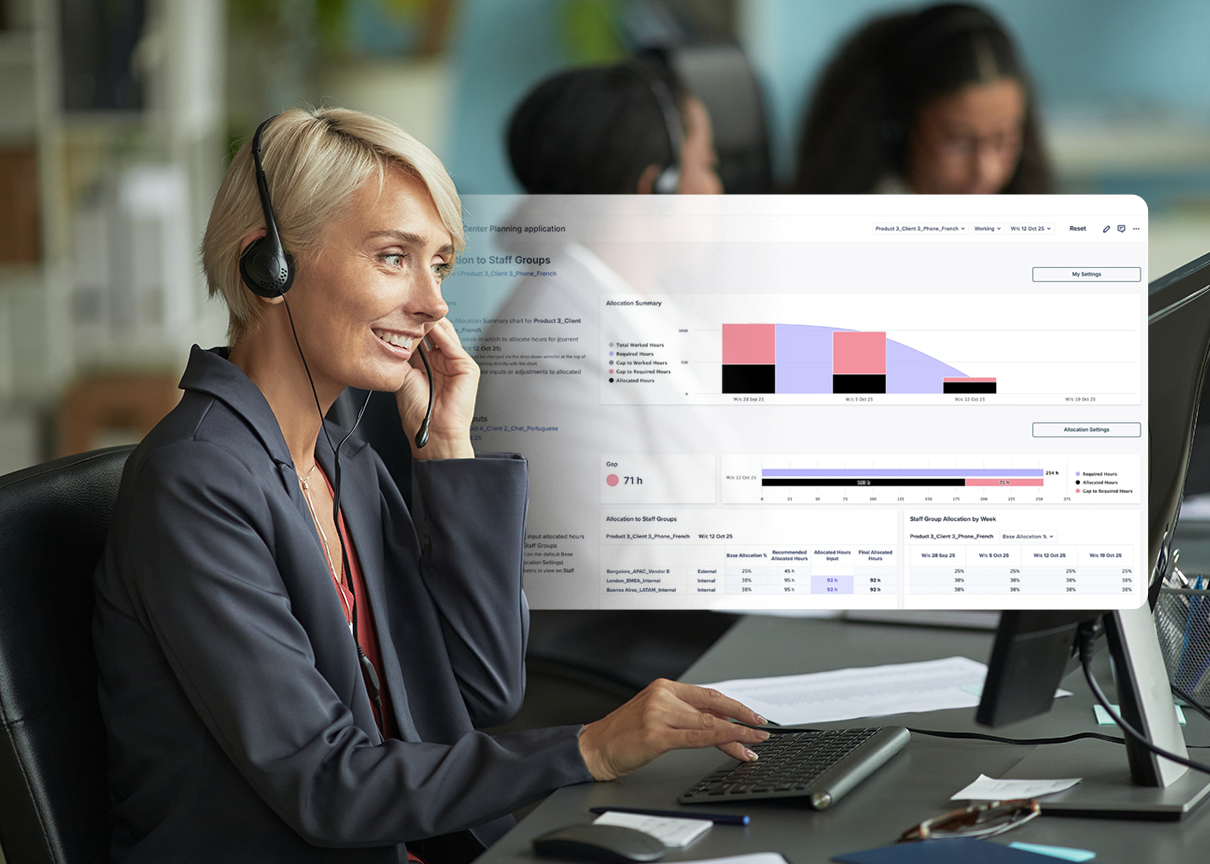
Enterprise Performance Management platforms like Anaplan are built around a different principles. Instead of data being spread across disconnected systems and files, they provide a single, connected planning environment where data, assumptions, models, and outputs coexist.
Inputs update models in near real time. Calculations run across millions of data points. Reporting and scenarios refresh immediately based on bottom‑up logic, not manual consolidation.
The result is not just faster reporting, but a fundamentally different way of working.
A frequent question we get asked is do EPM platforms replace ERP systems? The answer is that EPM systems sit alongside existing ERP systems. The answer, in practice, is that they are designed for integration and advanced analytics and reporting rather than replacement of ERP’s or BI systems.
Transactional data from ERP flows into the planning environment. Market data from commodity index providers connects directly to cost models. Source-to-pay systems feed contract and pricing data into procurement forecasts. BI tools continue to serve reporting use cases where appropriate.
The EPM platform becomes the planning layer — the place where data from multiple systems comes together so plans can be continuously updated as conditions change. Decisions are made on live information, not last month’s export.
Live data consolidation. Master data, Supplier pricing, contracted volumes, commodity indices, exchange rates, units of measure and operational demand data can all be connected within the planning model. When inputs change, the impact is immediately visible across forecasts, KPIs, and reports.
Scenario modelling as a daily tool. The ability to ask "what if tariffs change by 20%?" or "what does our cost position look like if our transport costs double, can we offset this if we switch supplier for this category?" This should not be a special project. In a connected planning environment, it is a standard query that takes seconds to execute. We explored the specific complexity of commodity scenarios in our post on forward curves and hedging, and the technology is what makes that kind of analysis operationally viable rather than theoretically interesting.
Automated reporting at scale. Budget vs actual vs forecast across hundreds or thousands of SKUs becomes an automated output, not a multi‑week exercise. Analysts spend less time building reports and more time interpreting drivers and advising stakeholders.
Governance and workflow built in. Forecast approvals, signoffs, hand offs and questions plus plan submissions can be managed within the platform with a clear audit trail. This matters both for internal governance and for the credibility of the numbers when they reach leadership or the board.
The organisations that have invested in this kind of connected architecture are the ones described in our post on lessons from CPG procurement's response to recent volatility as having outperformed. The technology infrastructure was not incidental to that. It was what made faster decision-making possible.
The case for investing in procurement planning technology is sometimes made purely on efficiency grounds: less manual work, faster cycle times, reduced analyst overhead. Those benefits are real, but they understate the strategic value.
The more important argument is about the quality of decisions. When procurement can model risk and opportunity in real time, respond to market changes before they become P&L surprises, and produce cost forecasts that stakeholders trust, it operates as a genuinely strategic function rather than a reporting one.
That shift requires the right processes and the right people, but it also requires the right tools. As we explored in our post on the challenges procurement professionals face, the gap between procurement's potential contribution and its actual influence in most organisations is largely a data and tooling gap.
For CIOs and procurement leaders, the question worth asking is simple: does your current planning infrastructure enable procurement to play that strategic role, or does it quietly limit it?
In most organisations we work with, the answer is becoming increasingly clear.
If you want to know more or keep up to date, follow our posts or contact Keyrus EPM.

There is a familiar moment in many procurement transformation programmes. The processes are well designed. The business questions are clear. And then the conversation hits the same point every time: the tools.
At that moment, it becomes obvious that the insights the organisation wants to generate — and the decisions it wants to make — simply aren’t achievable with Excel or with disconnected point solutions that cannot operate at the required speed or scale. More than once, the reaction is a complete shift in mindset:
“This is great, I want to get rid of excel in our planning processes.”
Excel is a great tool, and there are always tasks that should be performed in excel that don’t lend themselves to an ERP or EPM system. Generally, you started down the road of EPM implementation because of the limitation of excel and the gap in what you need to run the business and what excel can provide.
This post is about that gap. Not the procurement strategy, not the finance relationship, but the technology, and what modern Enterprise Performance Management platforms bring to the table, and why this is increasingly a strategic question rather than a systems one.
It important to be clear about this, because the conversation sometimes gets stuck in a debate about spreadsheets. The issue is not that Excel produces wrong answers. For a single category managed by one person with a defined set of inputs, it does the maths perfectly well. The issue is what happens when the business, and hence the challenges scale.
A larger CPG business managing direct materials procurement might have several hundred or several thousand active materials, sourced from multiple suppliers per category, across different geographies. Contract structures vary and cost drivers differ. Some of those materials are commodity-linked, other are logistics driven, ither depend on FXC movements. All of them ultimately feeding into product cost, which feeds into margin, which feeds into the financial plan.
Modelling that in a spreadsheet is technically possible. It just means a lot of tabs, multiple files maintained by different people, linked together with formulas that break when someone renames a tab or workbook, with no version control, no audit trail, and no ability for two people to work in the same spreadsheet at the same time. When something changes mid-cycle and the category manager needs to reforecast, the process of updating and reconciling can take longer than the planning cycle itself.
This is the structural limitation. Excel was designed as a calculation tool, not a planning platform.
ERP systems are the system of record for your transactional data: purchase orders, invoices, goods receipts, master data etc; OK no great insight here. They are good at capturing what happened. Where many organisations struggle is moving beyond execution into integrated, forward‑looking planning. ERPs still find it hard to model what might happen, to run scenarios, or to connect operational cost drivers to forecasted performance and financial plans at speed. Integrated S&OP and IBP capabilities have improved, but often not quickly or flexibly enough for procurement’s needs.
The gap between what ERP captures and what modern procurement planning requires is where most of the manual work lives. Data extracted from ERP, loaded into spreadsheets, manipulated, formatted and then sent to finance for further processing. Every step in that chain introduces the possibility of error, delay and version divergence. And every time market conditions change, the chain has to run again. BI reporting takes some of the effort out, but it can’t give you that dynamic, time series view and scenario analysis.
Enterprise Performance Management platforms like Anaplan are built around a different principles. Instead of data being spread across disconnected systems and files, they provide a single, connected planning environment where data, assumptions, models, and outputs coexist.
Inputs update models in near real time. Calculations run across millions of data points. Reporting and scenarios refresh immediately based on bottom‑up logic, not manual consolidation.
The result is not just faster reporting, but a fundamentally different way of working.
A frequent question we get asked is do EPM platforms replace ERP systems? The answer is that EPM systems sit alongside existing ERP systems. The answer, in practice, is that they are designed for integration and advanced analytics and reporting rather than replacement of ERP’s or BI systems.
Transactional data from ERP flows into the planning environment. Market data from commodity index providers connects directly to cost models. Source-to-pay systems feed contract and pricing data into procurement forecasts. BI tools continue to serve reporting use cases where appropriate.
The EPM platform becomes the planning layer — the place where data from multiple systems comes together so plans can be continuously updated as conditions change. Decisions are made on live information, not last month’s export.
Live data consolidation. Master data, Supplier pricing, contracted volumes, commodity indices, exchange rates, units of measure and operational demand data can all be connected within the planning model. When inputs change, the impact is immediately visible across forecasts, KPIs, and reports.
Scenario modelling as a daily tool. The ability to ask "what if tariffs change by 20%?" or "what does our cost position look like if our transport costs double, can we offset this if we switch supplier for this category?" This should not be a special project. In a connected planning environment, it is a standard query that takes seconds to execute. We explored the specific complexity of commodity scenarios in our post on forward curves and hedging, and the technology is what makes that kind of analysis operationally viable rather than theoretically interesting.
Automated reporting at scale. Budget vs actual vs forecast across hundreds or thousands of SKUs becomes an automated output, not a multi‑week exercise. Analysts spend less time building reports and more time interpreting drivers and advising stakeholders.
Governance and workflow built in. Forecast approvals, signoffs, hand offs and questions plus plan submissions can be managed within the platform with a clear audit trail. This matters both for internal governance and for the credibility of the numbers when they reach leadership or the board.
The organisations that have invested in this kind of connected architecture are the ones described in our post on lessons from CPG procurement's response to recent volatility as having outperformed. The technology infrastructure was not incidental to that. It was what made faster decision-making possible.
The case for investing in procurement planning technology is sometimes made purely on efficiency grounds: less manual work, faster cycle times, reduced analyst overhead. Those benefits are real, but they understate the strategic value.
The more important argument is about the quality of decisions. When procurement can model risk and opportunity in real time, respond to market changes before they become P&L surprises, and produce cost forecasts that stakeholders trust, it operates as a genuinely strategic function rather than a reporting one.
That shift requires the right processes and the right people, but it also requires the right tools. As we explored in our post on the challenges procurement professionals face, the gap between procurement's potential contribution and its actual influence in most organisations is largely a data and tooling gap.
For CIOs and procurement leaders, the question worth asking is simple: does your current planning infrastructure enable procurement to play that strategic role, or does it quietly limit it?
In most organisations we work with, the answer is becoming increasingly clear.
If you want to know more or keep up to date, follow our posts or contact Keyrus EPM.
There is a familiar moment in many procurement transformation programmes. The processes are well designed. The business questions are clear. And then the conversation hits the same point every time: the tools.
At that moment, it becomes obvious that the insights the organisation wants to generate — and the decisions it wants to make — simply aren’t achievable with Excel or with disconnected point solutions that cannot operate at the required speed or scale. More than once, the reaction is a complete shift in mindset:
“This is great, I want to get rid of excel in our planning processes.”
Excel is a great tool, and there are always tasks that should be performed in excel that don’t lend themselves to an ERP or EPM system. Generally, you started down the road of EPM implementation because of the limitation of excel and the gap in what you need to run the business and what excel can provide.
This post is about that gap. Not the procurement strategy, not the finance relationship, but the technology, and what modern Enterprise Performance Management platforms bring to the table, and why this is increasingly a strategic question rather than a systems one.
It important to be clear about this, because the conversation sometimes gets stuck in a debate about spreadsheets. The issue is not that Excel produces wrong answers. For a single category managed by one person with a defined set of inputs, it does the maths perfectly well. The issue is what happens when the business, and hence the challenges scale.
A larger CPG business managing direct materials procurement might have several hundred or several thousand active materials, sourced from multiple suppliers per category, across different geographies. Contract structures vary and cost drivers differ. Some of those materials are commodity-linked, other are logistics driven, ither depend on FXC movements. All of them ultimately feeding into product cost, which feeds into margin, which feeds into the financial plan.
Modelling that in a spreadsheet is technically possible. It just means a lot of tabs, multiple files maintained by different people, linked together with formulas that break when someone renames a tab or workbook, with no version control, no audit trail, and no ability for two people to work in the same spreadsheet at the same time. When something changes mid-cycle and the category manager needs to reforecast, the process of updating and reconciling can take longer than the planning cycle itself.
This is the structural limitation. Excel was designed as a calculation tool, not a planning platform.
ERP systems are the system of record for your transactional data: purchase orders, invoices, goods receipts, master data etc; OK no great insight here. They are good at capturing what happened. Where many organisations struggle is moving beyond execution into integrated, forward‑looking planning. ERPs still find it hard to model what might happen, to run scenarios, or to connect operational cost drivers to forecasted performance and financial plans at speed. Integrated S&OP and IBP capabilities have improved, but often not quickly or flexibly enough for procurement’s needs.
The gap between what ERP captures and what modern procurement planning requires is where most of the manual work lives. Data extracted from ERP, loaded into spreadsheets, manipulated, formatted and then sent to finance for further processing. Every step in that chain introduces the possibility of error, delay and version divergence. And every time market conditions change, the chain has to run again. BI reporting takes some of the effort out, but it can’t give you that dynamic, time series view and scenario analysis.
Enterprise Performance Management platforms like Anaplan are built around a different principles. Instead of data being spread across disconnected systems and files, they provide a single, connected planning environment where data, assumptions, models, and outputs coexist.
Inputs update models in near real time. Calculations run across millions of data points. Reporting and scenarios refresh immediately based on bottom‑up logic, not manual consolidation.
The result is not just faster reporting, but a fundamentally different way of working.
A frequent question we get asked is do EPM platforms replace ERP systems? The answer is that EPM systems sit alongside existing ERP systems. The answer, in practice, is that they are designed for integration and advanced analytics and reporting rather than replacement of ERP’s or BI systems.
Transactional data from ERP flows into the planning environment. Market data from commodity index providers connects directly to cost models. Source-to-pay systems feed contract and pricing data into procurement forecasts. BI tools continue to serve reporting use cases where appropriate.
The EPM platform becomes the planning layer — the place where data from multiple systems comes together so plans can be continuously updated as conditions change. Decisions are made on live information, not last month’s export.
Live data consolidation. Master data, Supplier pricing, contracted volumes, commodity indices, exchange rates, units of measure and operational demand data can all be connected within the planning model. When inputs change, the impact is immediately visible across forecasts, KPIs, and reports.
Scenario modelling as a daily tool. The ability to ask "what if tariffs change by 20%?" or "what does our cost position look like if our transport costs double, can we offset this if we switch supplier for this category?" This should not be a special project. In a connected planning environment, it is a standard query that takes seconds to execute. We explored the specific complexity of commodity scenarios in our post on forward curves and hedging, and the technology is what makes that kind of analysis operationally viable rather than theoretically interesting.
Automated reporting at scale. Budget vs actual vs forecast across hundreds or thousands of SKUs becomes an automated output, not a multi‑week exercise. Analysts spend less time building reports and more time interpreting drivers and advising stakeholders.
Governance and workflow built in. Forecast approvals, signoffs, hand offs and questions plus plan submissions can be managed within the platform with a clear audit trail. This matters both for internal governance and for the credibility of the numbers when they reach leadership or the board.
The organisations that have invested in this kind of connected architecture are the ones described in our post on lessons from CPG procurement's response to recent volatility as having outperformed. The technology infrastructure was not incidental to that. It was what made faster decision-making possible.
The case for investing in procurement planning technology is sometimes made purely on efficiency grounds: less manual work, faster cycle times, reduced analyst overhead. Those benefits are real, but they understate the strategic value.
The more important argument is about the quality of decisions. When procurement can model risk and opportunity in real time, respond to market changes before they become P&L surprises, and produce cost forecasts that stakeholders trust, it operates as a genuinely strategic function rather than a reporting one.
That shift requires the right processes and the right people, but it also requires the right tools. As we explored in our post on the challenges procurement professionals face, the gap between procurement's potential contribution and its actual influence in most organisations is largely a data and tooling gap.
For CIOs and procurement leaders, the question worth asking is simple: does your current planning infrastructure enable procurement to play that strategic role, or does it quietly limit it?
In most organisations we work with, the answer is becoming increasingly clear.
If you want to know more or keep up to date, follow our posts or contact Keyrus EPM.
There is a familiar moment in many procurement transformation programmes. The processes are well designed. The business questions are clear. And then the conversation hits the same point every time: the tools.
At that moment, it becomes obvious that the insights the organisation wants to generate — and the decisions it wants to make — simply aren’t achievable with Excel or with disconnected point solutions that cannot operate at the required speed or scale. More than once, the reaction is a complete shift in mindset:
“This is great, I want to get rid of excel in our planning processes.”
Excel is a great tool, and there are always tasks that should be performed in excel that don’t lend themselves to an ERP or EPM system. Generally, you started down the road of EPM implementation because of the limitation of excel and the gap in what you need to run the business and what excel can provide.
This post is about that gap. Not the procurement strategy, not the finance relationship, but the technology, and what modern Enterprise Performance Management platforms bring to the table, and why this is increasingly a strategic question rather than a systems one.
It important to be clear about this, because the conversation sometimes gets stuck in a debate about spreadsheets. The issue is not that Excel produces wrong answers. For a single category managed by one person with a defined set of inputs, it does the maths perfectly well. The issue is what happens when the business, and hence the challenges scale.
A larger CPG business managing direct materials procurement might have several hundred or several thousand active materials, sourced from multiple suppliers per category, across different geographies. Contract structures vary and cost drivers differ. Some of those materials are commodity-linked, other are logistics driven, ither depend on FXC movements. All of them ultimately feeding into product cost, which feeds into margin, which feeds into the financial plan.
Modelling that in a spreadsheet is technically possible. It just means a lot of tabs, multiple files maintained by different people, linked together with formulas that break when someone renames a tab or workbook, with no version control, no audit trail, and no ability for two people to work in the same spreadsheet at the same time. When something changes mid-cycle and the category manager needs to reforecast, the process of updating and reconciling can take longer than the planning cycle itself.
This is the structural limitation. Excel was designed as a calculation tool, not a planning platform.
ERP systems are the system of record for your transactional data: purchase orders, invoices, goods receipts, master data etc; OK no great insight here. They are good at capturing what happened. Where many organisations struggle is moving beyond execution into integrated, forward‑looking planning. ERPs still find it hard to model what might happen, to run scenarios, or to connect operational cost drivers to forecasted performance and financial plans at speed. Integrated S&OP and IBP capabilities have improved, but often not quickly or flexibly enough for procurement’s needs.
The gap between what ERP captures and what modern procurement planning requires is where most of the manual work lives. Data extracted from ERP, loaded into spreadsheets, manipulated, formatted and then sent to finance for further processing. Every step in that chain introduces the possibility of error, delay and version divergence. And every time market conditions change, the chain has to run again. BI reporting takes some of the effort out, but it can’t give you that dynamic, time series view and scenario analysis.
Enterprise Performance Management platforms like Anaplan are built around a different principles. Instead of data being spread across disconnected systems and files, they provide a single, connected planning environment where data, assumptions, models, and outputs coexist.
Inputs update models in near real time. Calculations run across millions of data points. Reporting and scenarios refresh immediately based on bottom‑up logic, not manual consolidation.
The result is not just faster reporting, but a fundamentally different way of working.
A frequent question we get asked is do EPM platforms replace ERP systems? The answer is that EPM systems sit alongside existing ERP systems. The answer, in practice, is that they are designed for integration and advanced analytics and reporting rather than replacement of ERP’s or BI systems.
Transactional data from ERP flows into the planning environment. Market data from commodity index providers connects directly to cost models. Source-to-pay systems feed contract and pricing data into procurement forecasts. BI tools continue to serve reporting use cases where appropriate.
The EPM platform becomes the planning layer — the place where data from multiple systems comes together so plans can be continuously updated as conditions change. Decisions are made on live information, not last month’s export.
Live data consolidation. Master data, Supplier pricing, contracted volumes, commodity indices, exchange rates, units of measure and operational demand data can all be connected within the planning model. When inputs change, the impact is immediately visible across forecasts, KPIs, and reports.
Scenario modelling as a daily tool. The ability to ask "what if tariffs change by 20%?" or "what does our cost position look like if our transport costs double, can we offset this if we switch supplier for this category?" This should not be a special project. In a connected planning environment, it is a standard query that takes seconds to execute. We explored the specific complexity of commodity scenarios in our post on forward curves and hedging, and the technology is what makes that kind of analysis operationally viable rather than theoretically interesting.
Automated reporting at scale. Budget vs actual vs forecast across hundreds or thousands of SKUs becomes an automated output, not a multi‑week exercise. Analysts spend less time building reports and more time interpreting drivers and advising stakeholders.
Governance and workflow built in. Forecast approvals, signoffs, hand offs and questions plus plan submissions can be managed within the platform with a clear audit trail. This matters both for internal governance and for the credibility of the numbers when they reach leadership or the board.
The organisations that have invested in this kind of connected architecture are the ones described in our post on lessons from CPG procurement's response to recent volatility as having outperformed. The technology infrastructure was not incidental to that. It was what made faster decision-making possible.
The case for investing in procurement planning technology is sometimes made purely on efficiency grounds: less manual work, faster cycle times, reduced analyst overhead. Those benefits are real, but they understate the strategic value.
The more important argument is about the quality of decisions. When procurement can model risk and opportunity in real time, respond to market changes before they become P&L surprises, and produce cost forecasts that stakeholders trust, it operates as a genuinely strategic function rather than a reporting one.
That shift requires the right processes and the right people, but it also requires the right tools. As we explored in our post on the challenges procurement professionals face, the gap between procurement's potential contribution and its actual influence in most organisations is largely a data and tooling gap.
For CIOs and procurement leaders, the question worth asking is simple: does your current planning infrastructure enable procurement to play that strategic role, or does it quietly limit it?
In most organisations we work with, the answer is becoming increasingly clear.
If you want to know more or keep up to date, follow our posts or contact Keyrus EPM.


There is a familiar moment in many procurement transformation programmes. The processes are well designed. The business questions are clear. And then the conversation hits the same point every time: the tools.
At that moment, it becomes obvious that the insights the organisation wants to generate — and the decisions it wants to make — simply aren’t achievable with Excel or with disconnected point solutions that cannot operate at the required speed or scale. More than once, the reaction is a complete shift in mindset:
“This is great, I want to get rid of excel in our planning processes.”
Excel is a great tool, and there are always tasks that should be performed in excel that don’t lend themselves to an ERP or EPM system. Generally, you started down the road of EPM implementation because of the limitation of excel and the gap in what you need to run the business and what excel can provide.
This post is about that gap. Not the procurement strategy, not the finance relationship, but the technology, and what modern Enterprise Performance Management platforms bring to the table, and why this is increasingly a strategic question rather than a systems one.
It important to be clear about this, because the conversation sometimes gets stuck in a debate about spreadsheets. The issue is not that Excel produces wrong answers. For a single category managed by one person with a defined set of inputs, it does the maths perfectly well. The issue is what happens when the business, and hence the challenges scale.
A larger CPG business managing direct materials procurement might have several hundred or several thousand active materials, sourced from multiple suppliers per category, across different geographies. Contract structures vary and cost drivers differ. Some of those materials are commodity-linked, other are logistics driven, ither depend on FXC movements. All of them ultimately feeding into product cost, which feeds into margin, which feeds into the financial plan.
Modelling that in a spreadsheet is technically possible. It just means a lot of tabs, multiple files maintained by different people, linked together with formulas that break when someone renames a tab or workbook, with no version control, no audit trail, and no ability for two people to work in the same spreadsheet at the same time. When something changes mid-cycle and the category manager needs to reforecast, the process of updating and reconciling can take longer than the planning cycle itself.
This is the structural limitation. Excel was designed as a calculation tool, not a planning platform.
ERP systems are the system of record for your transactional data: purchase orders, invoices, goods receipts, master data etc; OK no great insight here. They are good at capturing what happened. Where many organisations struggle is moving beyond execution into integrated, forward‑looking planning. ERPs still find it hard to model what might happen, to run scenarios, or to connect operational cost drivers to forecasted performance and financial plans at speed. Integrated S&OP and IBP capabilities have improved, but often not quickly or flexibly enough for procurement’s needs.
The gap between what ERP captures and what modern procurement planning requires is where most of the manual work lives. Data extracted from ERP, loaded into spreadsheets, manipulated, formatted and then sent to finance for further processing. Every step in that chain introduces the possibility of error, delay and version divergence. And every time market conditions change, the chain has to run again. BI reporting takes some of the effort out, but it can’t give you that dynamic, time series view and scenario analysis.
Enterprise Performance Management platforms like Anaplan are built around a different principles. Instead of data being spread across disconnected systems and files, they provide a single, connected planning environment where data, assumptions, models, and outputs coexist.
Inputs update models in near real time. Calculations run across millions of data points. Reporting and scenarios refresh immediately based on bottom‑up logic, not manual consolidation.
The result is not just faster reporting, but a fundamentally different way of working.
A frequent question we get asked is do EPM platforms replace ERP systems? The answer is that EPM systems sit alongside existing ERP systems. The answer, in practice, is that they are designed for integration and advanced analytics and reporting rather than replacement of ERP’s or BI systems.
Transactional data from ERP flows into the planning environment. Market data from commodity index providers connects directly to cost models. Source-to-pay systems feed contract and pricing data into procurement forecasts. BI tools continue to serve reporting use cases where appropriate.
The EPM platform becomes the planning layer — the place where data from multiple systems comes together so plans can be continuously updated as conditions change. Decisions are made on live information, not last month’s export.
Live data consolidation. Master data, Supplier pricing, contracted volumes, commodity indices, exchange rates, units of measure and operational demand data can all be connected within the planning model. When inputs change, the impact is immediately visible across forecasts, KPIs, and reports.
Scenario modelling as a daily tool. The ability to ask "what if tariffs change by 20%?" or "what does our cost position look like if our transport costs double, can we offset this if we switch supplier for this category?" This should not be a special project. In a connected planning environment, it is a standard query that takes seconds to execute. We explored the specific complexity of commodity scenarios in our post on forward curves and hedging, and the technology is what makes that kind of analysis operationally viable rather than theoretically interesting.
Automated reporting at scale. Budget vs actual vs forecast across hundreds or thousands of SKUs becomes an automated output, not a multi‑week exercise. Analysts spend less time building reports and more time interpreting drivers and advising stakeholders.
Governance and workflow built in. Forecast approvals, signoffs, hand offs and questions plus plan submissions can be managed within the platform with a clear audit trail. This matters both for internal governance and for the credibility of the numbers when they reach leadership or the board.
The organisations that have invested in this kind of connected architecture are the ones described in our post on lessons from CPG procurement's response to recent volatility as having outperformed. The technology infrastructure was not incidental to that. It was what made faster decision-making possible.
The case for investing in procurement planning technology is sometimes made purely on efficiency grounds: less manual work, faster cycle times, reduced analyst overhead. Those benefits are real, but they understate the strategic value.
The more important argument is about the quality of decisions. When procurement can model risk and opportunity in real time, respond to market changes before they become P&L surprises, and produce cost forecasts that stakeholders trust, it operates as a genuinely strategic function rather than a reporting one.
That shift requires the right processes and the right people, but it also requires the right tools. As we explored in our post on the challenges procurement professionals face, the gap between procurement's potential contribution and its actual influence in most organisations is largely a data and tooling gap.
For CIOs and procurement leaders, the question worth asking is simple: does your current planning infrastructure enable procurement to play that strategic role, or does it quietly limit it?
In most organisations we work with, the answer is becoming increasingly clear.
If you want to know more or keep up to date, follow our posts or contact Keyrus EPM.






Access the full details of this key play, and have it on the go. Available as a PDF.


Have questions about our EPM solutions? Our team is ready to help you find the right approach for your business.






.png)